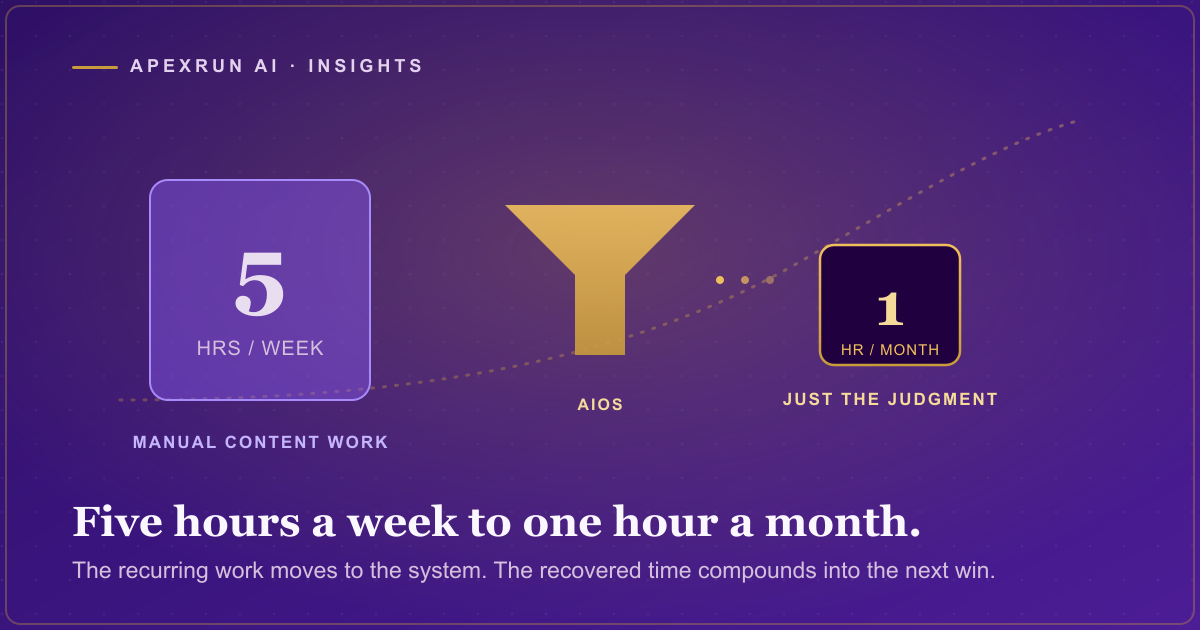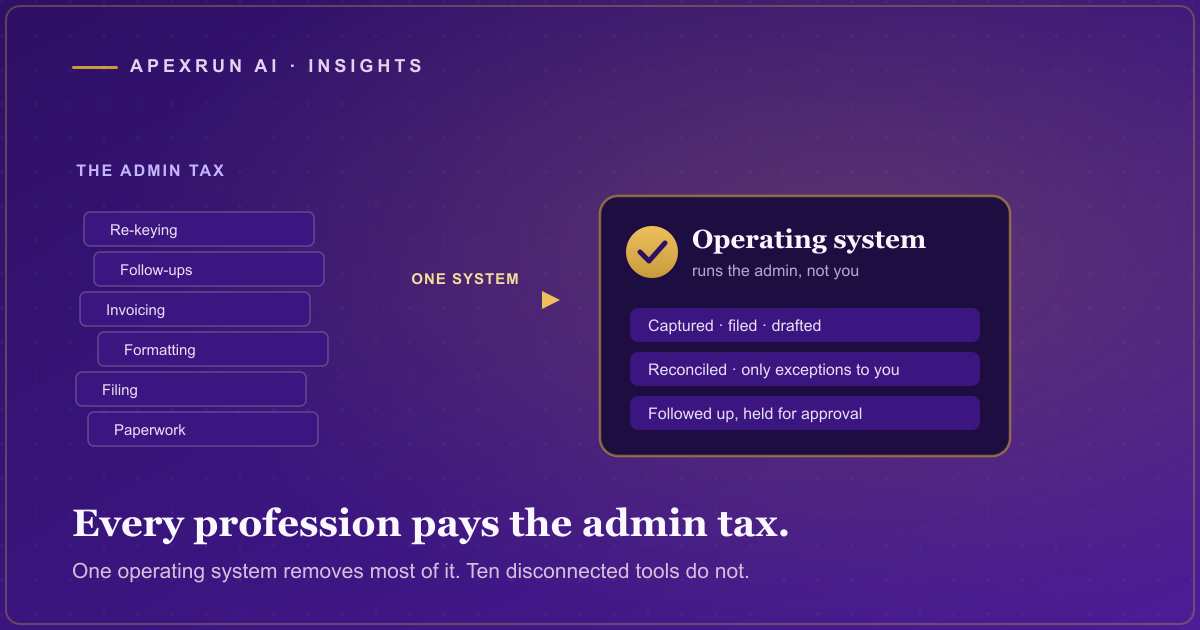
There is a tax nobody legislated and everybody pays. It does not show up on a return, it is not deductible, and it is almost certainly the single largest cost in your business that you have never measured. I call it the admin tax: the hours every week that go into paperwork, re-keying, chasing, formatting, and filing, none of which a client will ever pay you for, all of which has to happen anyway. Every profession pays it, and to reduce administrative burden business-wide is not a productivity nicety, it is the closest thing to found money most operations have available. The only question worth asking is how much of it you can stop paying, and the honest answer for most owners is: far more than you think.
The admin tax is the same shape in every profession
What surprises people is how identical this tax looks across wildly different businesses. The label changes. The underlying waste does not.
A law firm pays it as engagement letters, matter intake, time reconstruction, and trust ledger reconciliation. An accounting practice pays it as re-keying figures between systems, chasing missing documents, and formatting the same statements every quarter. A medical or dental clinic pays it as charting, referral letters, insurance forms, and recall scheduling. A real estate team pays it as listing paperwork, coordination emails, and the fifty small follow-ups that decide whether a deal closes. A trades business pays it as quoting from the truck at night, invoicing on the weekend, and booking the next job by phone tag. A consultant pays it as proposals, status reports, and the deck that eats Friday.
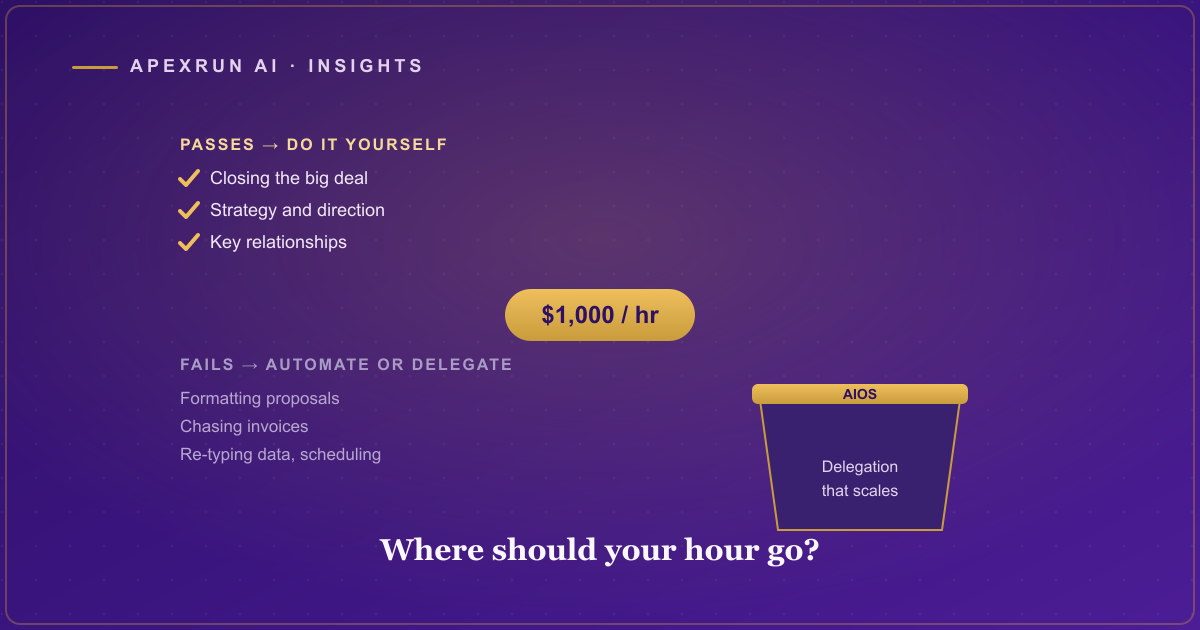
Different words, one tax. In each case, a highly capable person who is expensive precisely because of their judgment spends a large slice of the week on work that requires none of it. The task is necessary. The person doing it is wildly overqualified. That gap between what the task needs and what the person costs is the tax, and it compounds every single week you leave it in place. If you want the sharpest version of that math, the $20 work in a $400 seat piece runs it all the way down.
Why the tax never shows up on the books
The reason this cost stays invisible is that it never appears as a line item. You do not write a cheque for the admin tax. You pay it in the most expensive currency you have, which is the time of the person who could otherwise be doing the work that actually earns, and that opportunity cost is silent by nature.
If you bill at two hundred or four hundred an hour and you spend ninety minutes a day on admin, nobody sends you an invoice for it, so it does not feel like spending. But you have absorbed the cost as capacity you will never get back. You did not lose money you can see. You lost the deals you did not chase, the clients you did not advise, the strategic work that did not get done, and the evenings you did not spend away from the desk. That is why owners tolerate it for years: a cost you cannot see on a statement is a cost that is very easy to accept as simply the way things are. It is not the way things have to be.
Why buying more tools makes the tax worse, not better
The instinct is to attack the tax with software, and most owners have already tried. A scheduling app here. A document tool there. A note-taker, a chatbot, a form builder. Six months later the admin tax is unchanged, and sometimes higher, because a pile of disconnected tools does not remove work. It relocates it and adds coordination on top.
Each single-purpose tool solves one slice and creates new handoffs around itself. Now someone has to move the output from one app to the next, decide what to do with it, and remember the step that connects them. You have automated three tasks and created five seams, and the seams are where your time actually dies. This is the trap that convinces people automation does not deliver. It is not that the tools are bad. It is that a collection of tools is not a system, and only a system can carry a whole workflow end to end without a human stitching the pieces together by hand.
How to reduce administrative burden business-wide: one operating system, not ten tools
The way to actually reduce the administrative burden on a business is to stop buying task tools and put one operating layer underneath the whole operation. An AI operating system does not solve a single task in isolation. It runs the connected flow: the intake arrives, it is captured, filed, drafted, updated, scheduled, and followed up, as one motion, with you brought in only where your judgment carries real consequences.
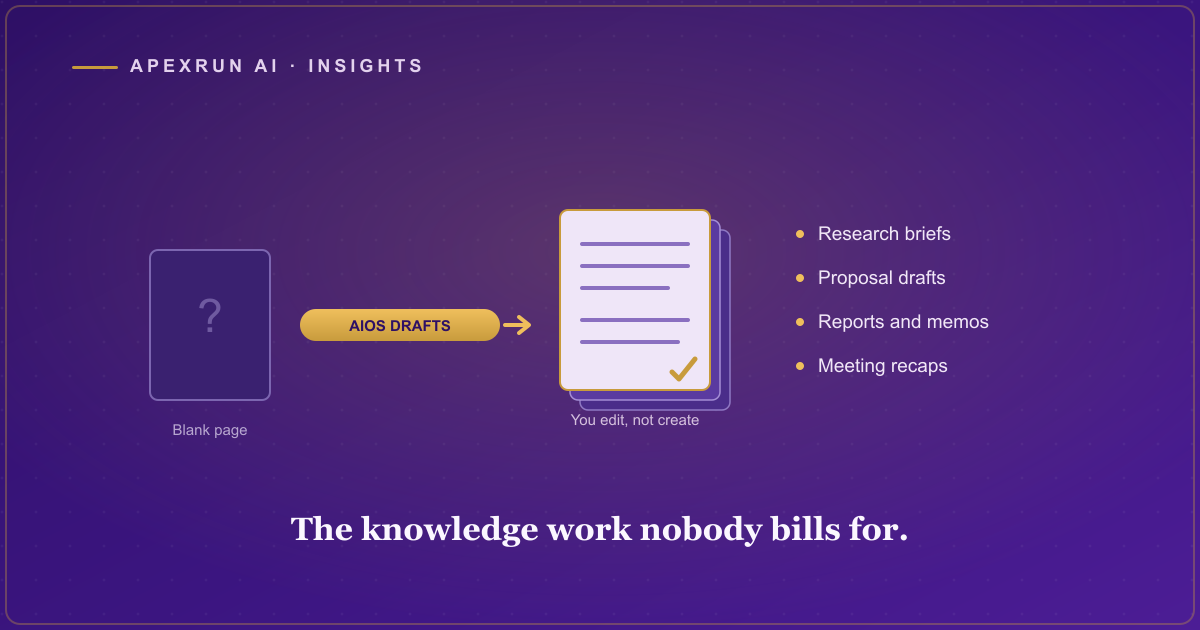
That is the structural difference. Instead of you being the human glue between a dozen apps, the system holds the workflow together and hands you decisions instead of chores. The report drafts itself from your notes and waits for your sign-off. The invoice generates from the logged work. The figures reconcile and only the exceptions reach you. The follow-up writes itself and holds for your approval. Wherever an error would be costly, a human approval gate stays in place, so you are reviewing finished work rather than producing it from a blank page. The what is an AIOS overview lays out exactly how those layers connect, but the headline is simple: one system that runs the admin, not ten tools that each hand you more of it.
What stopping the tax is actually worth
Run the number on yourself before you dismiss it. Take the hours you personally lose to admin in a week and multiply by what your time is genuinely worth. For most professionals that figure is large enough to be uncomfortable, which is the point. That is the size of the tax you have been quietly paying, and a well-built operating system can take back the majority of it [ESTIMATED, varies by business].
Those reclaimed hours do not evaporate into more admin. They move to the work that grows the business, or they leave the office entirely and give you back an evening. Either way, the return is not marginal, because you are converting your most expensive hours from busywork back into the work only you can do. For a law firm or any practice where the principal’s time is the product, that conversion is the whole game.
The reason most owners never capture this is not that the fix is hard. It is that they never mapped the tax, so they never saw how large it was or which piece to remove first. That mapping is exactly what the Free CEO Audit does. In one hour, direct with the decision-maker, we measure where your admin tax is heaviest and hand you a prioritized plan for removing it, in the order that pays back fastest. You will leave knowing precisely what the tax is costing you, and you can stop paying it whenever you decide to.