If you handle customer information in Canada, PIPEDA applies to you, and it applied long before anyone put AI in front of it.
Nothing about using AI changes the underlying obligations. What changes is how easy it becomes to break them by accident.
This is a plain-language summary, not legal advice. For anything consequential, ask a lawyer who practises in this area.
The part that catches people out
PIPEDA is built around consent and purpose. You collect information for a stated reason, and you use it for that reason.
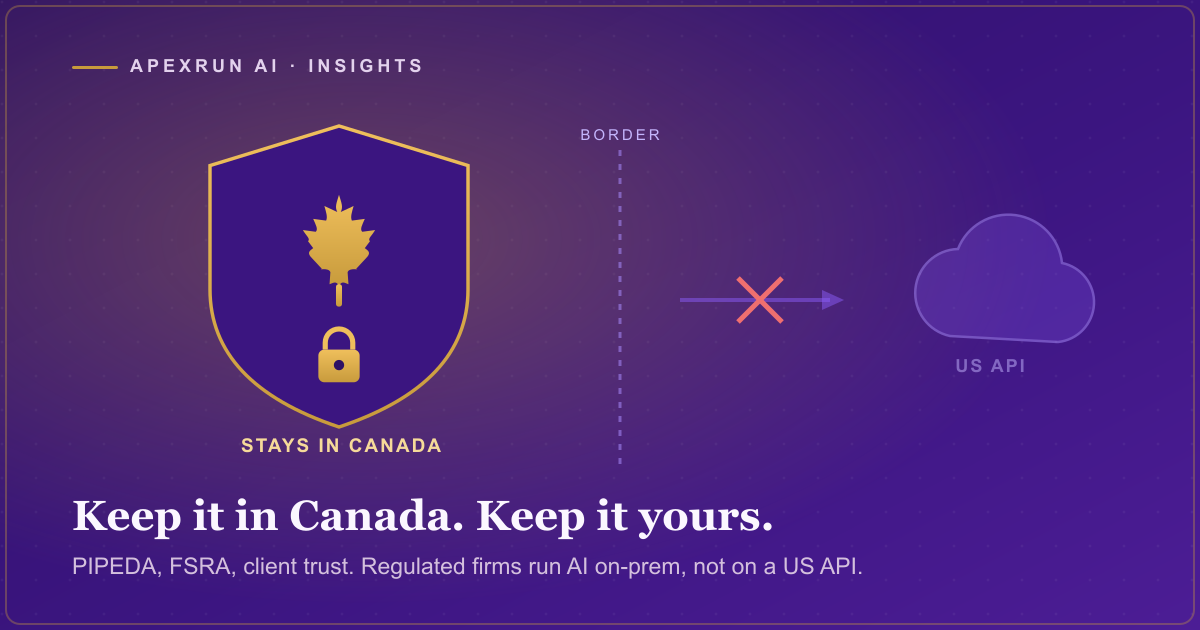
The problem with AI tools is that pasting a customer file into a general chatbot is a disclosure. You have handed personal information to a third party, quite possibly in another country, for a purpose your customer never agreed to.
That is the single most common way a small business gets this wrong, and it usually happens with good intentions and no bad actor anywhere.
Four questions to ask any vendor
Where is the data processed? Not where the company is headquartered. Where the actual processing happens. These are frequently different countries.
Is my data used to train anything? For most business tools the answer should be no, and it should be in writing. If it is buried in terms that can change, treat it as a yes.
How long is it retained, and can I delete it? You need to be able to answer a customer who asks you to remove their information. If your vendor cannot delete it, you cannot comply.
Who at the vendor can see it? There is a real difference between encrypted storage nobody reads and a support team with access to your records.
What actually reduces risk
Three things, in rough order of effect.
Do not send what you do not need to send. Most automation does not need a full customer file. A booking system needs a name, a number and a time. Send the minimum.
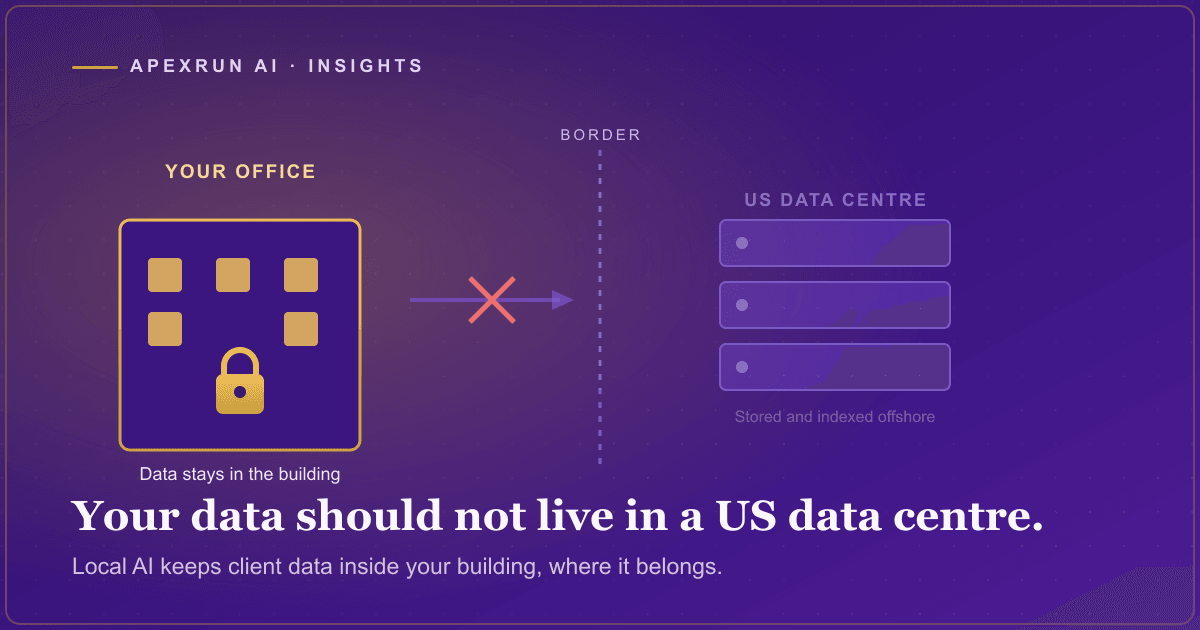
Keep the sensitive work in Canada. For most tools this is a configuration choice, and for some it is a deployment choice. For clinics, law firms and financial practices, running the sensitive parts on infrastructure you control removes an entire category of problem.
Write down what you are doing. A short document saying what information goes where, and why, is what turns an uncomfortable question into a two-minute answer.
The on-premises option
For some businesses the cleanest answer is that the sensitive part never leaves the building.
Models can run on hardware you own. It costs more up front and less per month, it is slower to set up, and for a practice holding health or legal records it can be the difference between a system you can use and one you cannot.
It is not the right answer for everyone. It is worth knowing it exists, because most vendors will not mention it.
About AIDA
Canada’s proposed AI legislation has been through several versions and its status has changed more than once. I am not going to summarise a moving target and tell you it is current.
What is safe to say is the direction: more documentation of what your systems do, and more responsibility for outcomes when they affect people. A business that already knows what data goes where will find that far less painful than one that does not.
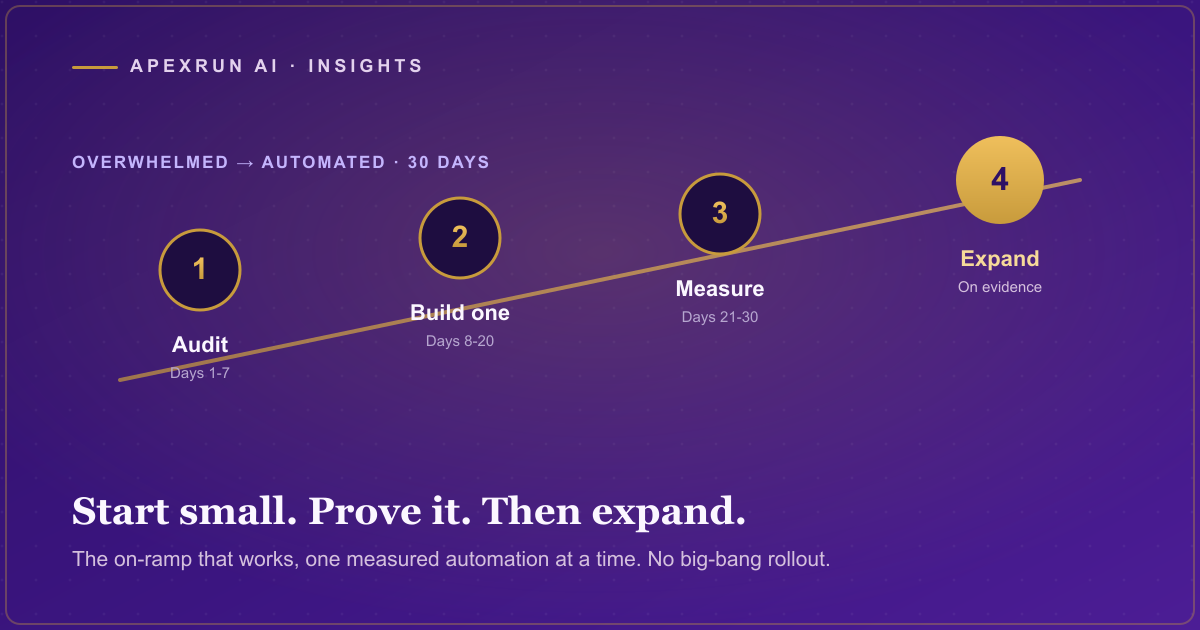
Where to start this week
Open whichever AI tool people in your business are already using, and find out what has been pasted into it.
Most owners are surprised. That is not a failure of your team. It is what happens when a useful tool arrives faster than a policy.
Then write one page: what information we put into which tools, and why. That page is the beginning of compliance, and it takes an afternoon.