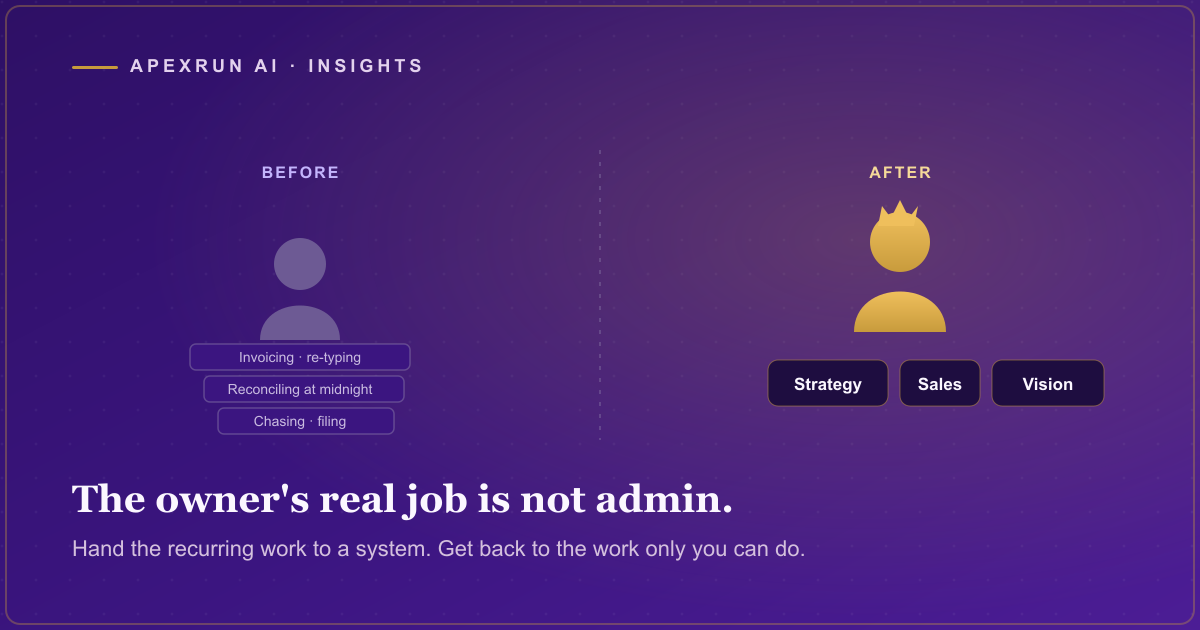
Nobody starts a business to do data entry. You started it to build something, to be the best in your city at the thing you are good at, to own your time instead of renting it to an employer. And then, somewhere in the second or third year, you looked up and realized you had become the highest-paid clerk in your own company. You do the invoicing. You chase the payments. You re-type the intake. You reconcile the numbers at midnight because that is the only hour nobody needs you. The ability to focus on high value work as owner-operators, the entire reason any of us take the risk, quietly gets buried under the busywork of keeping the lights on. That is not a personal failing. It is the default gravity of running a small business, and until recently there was no clean way out of it.
There is now. That is the actual news in all of the AI noise, and it has almost nothing to do with the technology being clever.
The founder was never supposed to be the clerk
Think about what your real job is. Strip away everything that anyone else could theoretically do and look at what is left. It is a short list, and it is the entire value of you being in the chair. Setting the direction. Winning the clients only you can win. Making the judgment calls that carry real consequences. Building the relationships that the business runs on. Deciding what the company becomes. That is the owner’s job. Everything else is overhead you happen to be absorbing because it was cheaper than hiring, or because it grew on you one small task at a time until it was a second full-time role you never applied for.
The tragedy of most owner-run businesses is that the person with the sharpest judgment in the building spends the majority of the week on the lowest-value work in the building. You can feel it. The days full of motion that move nothing forward. The sense that you are busy constantly and building rarely. That feeling is not burnout for its own sake. It is the specific exhaustion of a person doing a job far below their pay grade, in their own company, with no one to hand it to. The thousand-dollar-hour test is the cleanest way to see exactly how much of your week has slid down to work that does not need you at all.
Why hiring never fully fixed it
The traditional answer was to hire your way out. Bring in an assistant, an office manager, a bookkeeper, and offload the admin to them. It helps, and for some businesses it is the right move. But it never fully solved the problem, for three stubborn reasons.
First, a person is a fixed cost that scales with headcount, so the admin relief arrives with a payroll line that grows as you grow. Second, a person needs managing, which means you trade doing the task for supervising the task, and supervision is its own draw on your attention. Third, and most frustrating, the interesting-but-tedious middle of the work still lands back on your desk, because it needs your context to even begin. The assistant can send the follow-up, but you have to decide what it says. The bookkeeper can enter the numbers, but you have to resolve the exceptions. You delegated the easy 80 percent and kept the 20 percent that actually interrupts your day. The bottleneck moved. It did not leave.
How to focus on high value work as owner-operators again
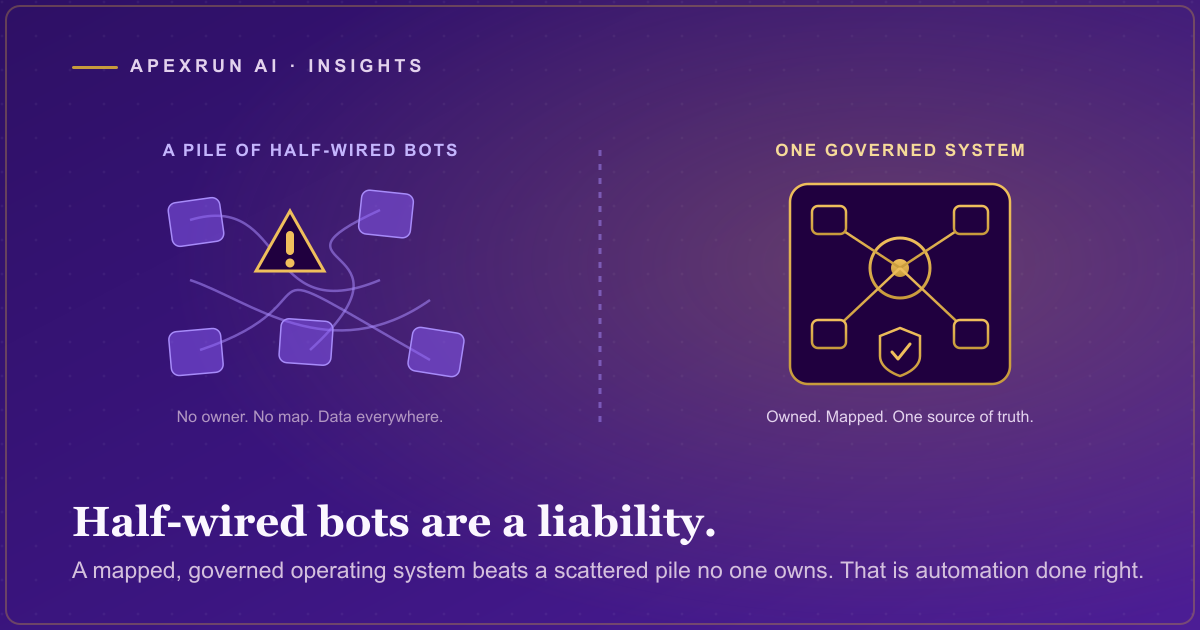
An AI operating system solves the part hiring could not, because it does not just take a task off your list. It runs the whole recurring flow and hands you back only the decisions. The intake comes in, and the system captures it, files it, drafts the response, updates the record, and books the next step. The invoice generates itself from the logged work. The follow-ups get written and queued. The numbers reconcile and only the genuine exceptions surface. And at every point where a mistake would be expensive, a human approval gate keeps you in control, so you are signing off on finished work in seconds instead of producing it from scratch over an hour.
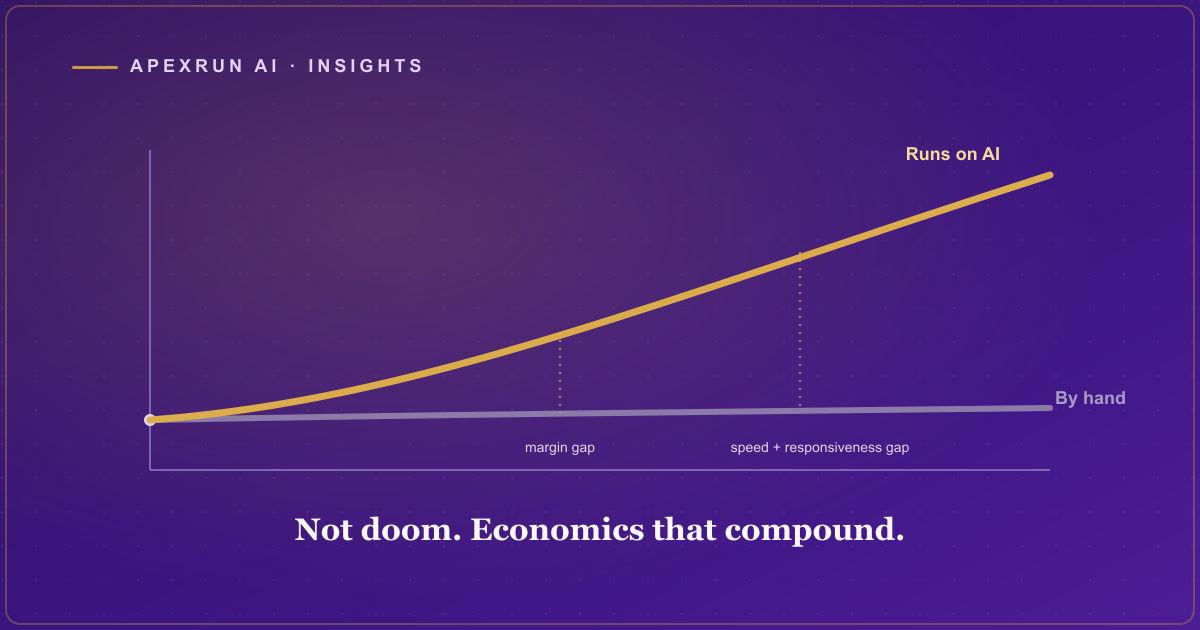
The difference that makes is not that you have a helper. It is that the recurring operation runs without you being the engine, at a cost that does not climb with every new hire, so the hours that used to vanish into admin come back to you clean. What you do with those reclaimed hours is the entire point. You put them on the short list. You sell, you set direction, you win the clients, you build the thing you started the business to build. The system did not make you more productive at admin. It removed the admin from your plate so you could go be the owner again. The shape of that full handoff, and what it costs, is laid out in the packages.
This is a momentum problem, not just a time problem
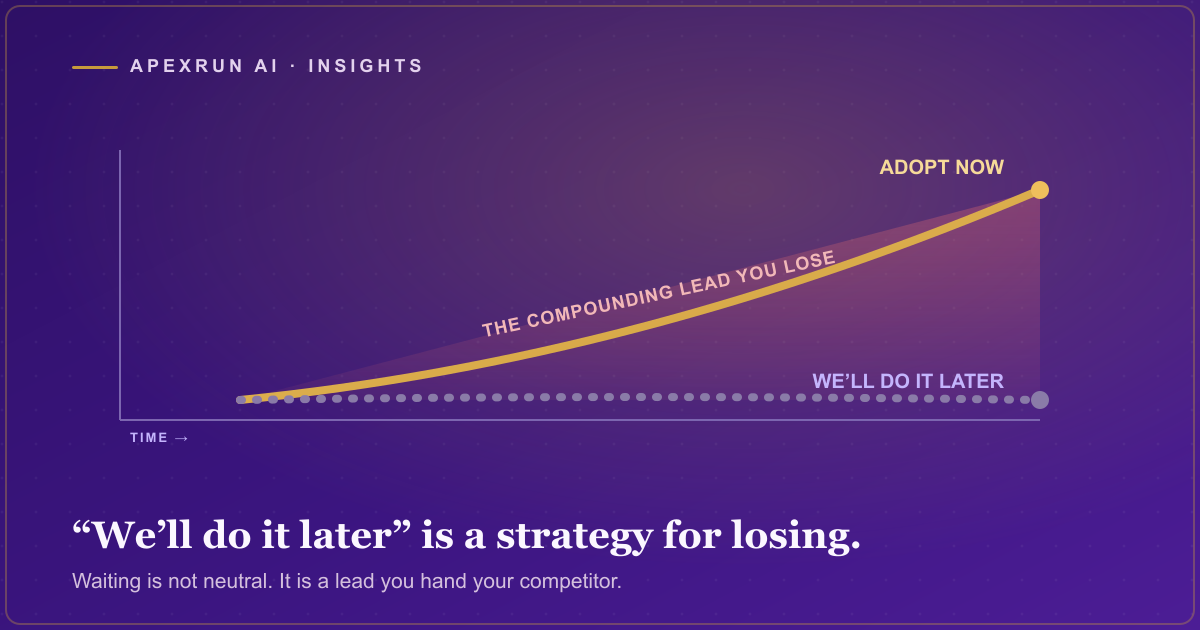
The reason this matters beyond the hours is momentum. A business where the owner is buried in admin does not just lose time. It loses direction, because the person who is supposed to be steering is heads-down in the engine room. Growth stalls not because the market dried up but because nobody was doing the growth work. The clients did not get chased. The strategy did not get set. The next move did not get made, because the owner was reconciling ledgers.
When the admin lifts, momentum returns almost immediately, because the most capable person in the company is suddenly pointed at the work that actually moves it, for the first time in years. A real estate team is the clearest example: the moment the principal is freed from listing paperwork and coordination churn, they are back in front of clients and deals, which is the only place the business actually grows. The same pattern holds in every owner-run practice. The admin was never the constraint on its own. The constraint was that removing the admin meant the owner had to do it, and the owner was already full.
Where to start being the owner again
You do not get your job back by working harder or buying another tool. You get it back by mapping where your hours actually go, finding the admin that a system can take off your plate, and automating it first, in the order that frees the most owner-time fastest.
That mapping is what the Free CEO Audit is for. In one hour, direct with you, we look at where your week really goes, identify what an AI operating system can run without you, and hand you a prioritized plan, so you know exactly which busywork to hand off first. You started this to build something. It is time to get back to that. Book the hour, and let us find the fastest path to returning you to the work only you can do.