Every business tracks the hours it can bill. Almost none of them track the hours it cannot. When you decide to automate research and document drafting, the first thing you notice is how much of your week was going into work that never appeared on a single invoice, and yet had to be done before the billable work could start. The research brief before the client call. The proposal draft before the proposal. The summary of the meeting, the background memo, the first pass at the report. This is knowledge work, and in most small businesses it is the largest untracked cost in the building.
Nobody bills for it because you cannot. A client pays for the finished advice, the delivered project, the signed deal. They do not pay for the two hours you spent pulling together what you needed to know before you could give the advice. So that time sits in a blind spot. It is real, it is expensive, and because it never shows up as a line item, it never gets managed. It just quietly eats your evenings.
The internal artifacts that never make it to an invoice
Walk through a normal week and count the documents you produce that no client will ever see as a deliverable. The list is longer than most owners expect.
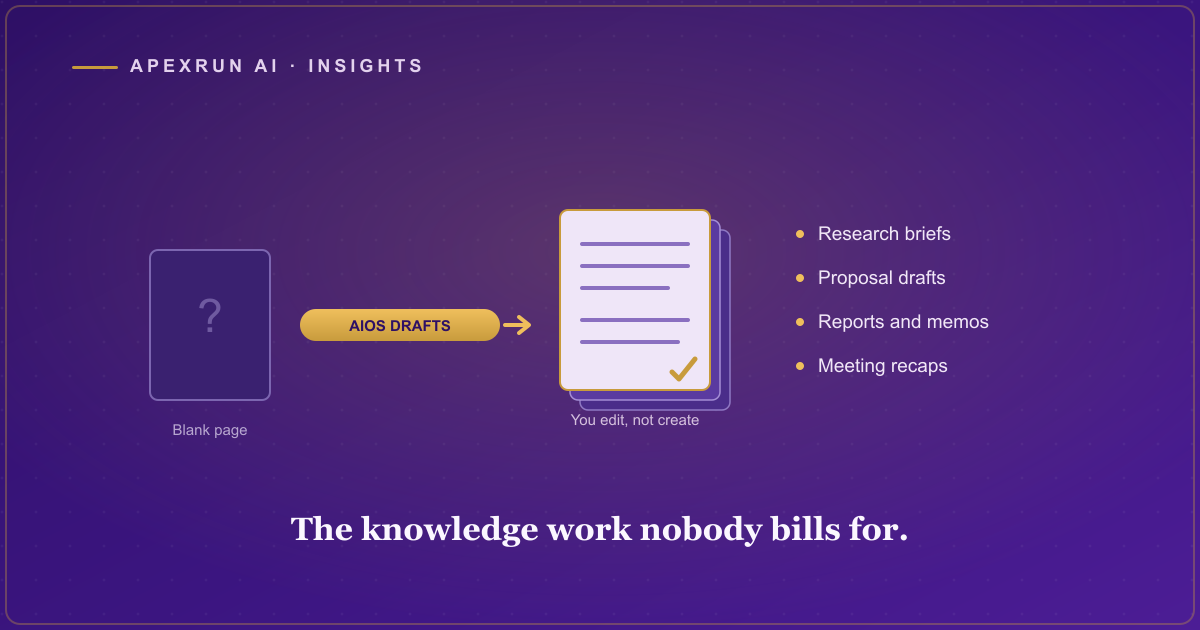
There is the research: reading around a topic before you can speak to it, checking what a prospect’s company actually does before a meeting, gathering the background on a question a client asked. There are the internal drafts: the first version of a proposal, the outline of a report, the skeleton of a plan that you will later polish. There are the summaries: the recap of a call, the notes that turn a messy conversation into something you can act on, the status update nobody enjoys writing. And there are the documents that support the real work: the covering note, the scope description, the follow-up that references what was discussed.
None of these is the product. All of them are required to make the product. And every one of them is knowledge work that a qualified person is doing by hand, from a blank page, over and over, in the time between the work that actually pays.
Why the blank page is the expensive part
Here is the thing owners underestimate. The cost is not in the editing. It is in the creating. Starting from nothing is the slow, draining part of any document. Staring at an empty proposal template at 9 PM, trying to find the first sentence, is where the hour goes. Once there is a solid draft in front of you, shaping it into something good is fast, because now you are reacting to something concrete instead of conjuring it out of air.
That is the whole insight behind automating this work. The machine is genuinely good at the blank-page problem. It can pull the research together, produce the first draft, summarize the call, and assemble the supporting document from the finished inputs. It is not as good as you at the final judgment, the nuance, the specific thing you know about this client that no system does. But it does not need to be. It needs to get you from nothing to a strong draft, so that your qualified time goes into editing and improving rather than creating from scratch. You stop being the author of the first draft and become the editor of it, and the editor’s job is an hour where the author’s job was three.
What an AI operating system actually drafts
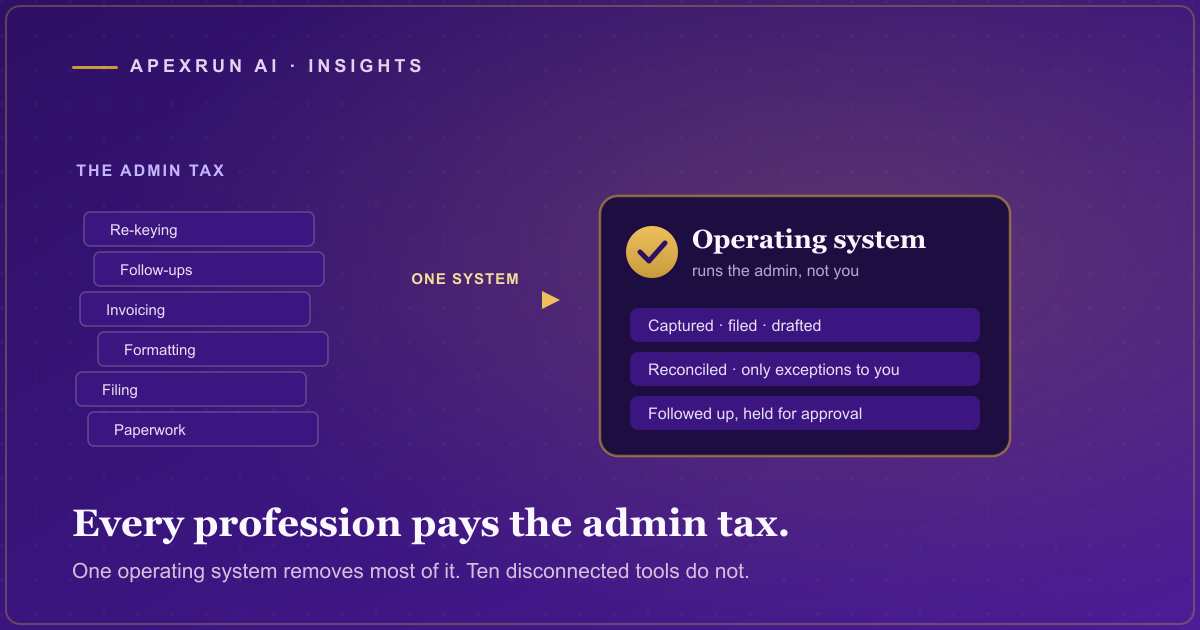
We call the connected version of this an AIOS, an AI operating system, and the point is that it does not do one document in isolation. It sits across the internal knowledge work and drafts the recurring pieces from the information already flowing through your business.
The research brief before a meeting, pulled together from what is known about the company and the topic, so you walk in prepared instead of scrambling. The proposal first draft, built from the shape of the deal and your standard structure, so you are refining an argument rather than inventing one. The report and the management summary, drafted from the finished numbers and the month’s activity. The meeting recap and the follow-up note, generated from what was actually discussed. The background memo that used to take an afternoon of reading and writing.
In every case the pattern is identical, and it is the same pattern that runs through all of this work: the system prepares, you approve. Nothing goes out under your name until you have read it and made it yours. This is the same human-holds-the-pen design that makes automation safe in serious work, which is exactly the split I laid out in high-value versus low-value hours, the machine does the low-value creation, you keep the high-value judgment.
The hours you get back are not small
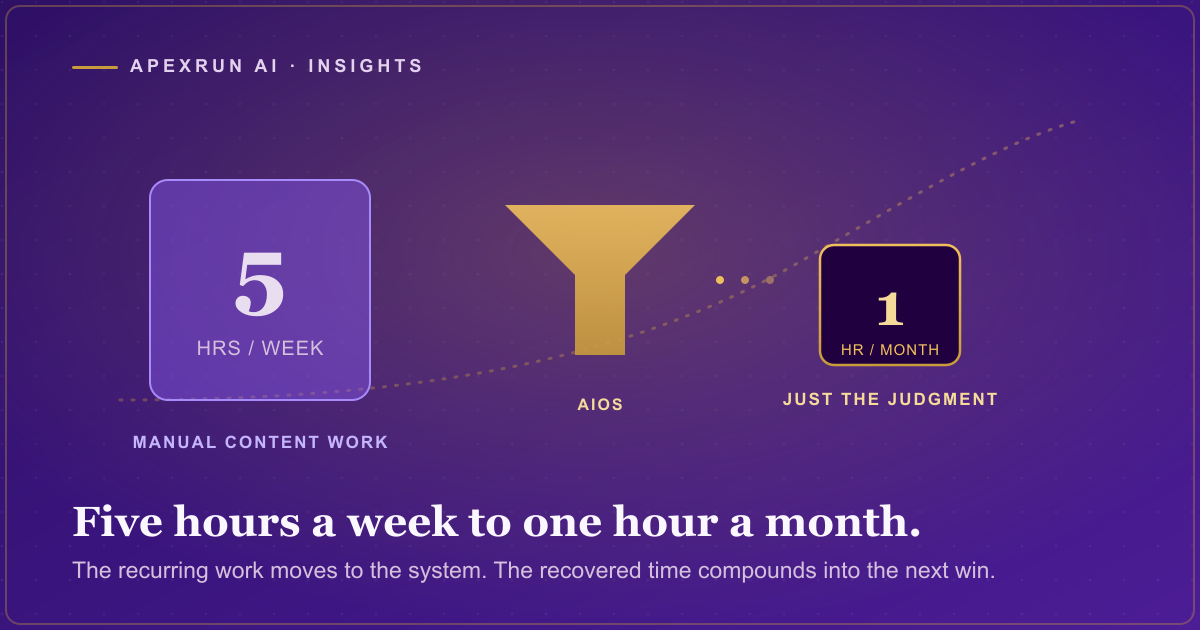
Owners consistently underestimate this number because it is spread thin across the week and never measured. Say the research, the internal drafting, the summaries, and the supporting documents eat eight hours of a professional’s week [ESTIMATED, varies by business]. That is a full working day, every week, going into artifacts nobody pays for directly. If a system absorbs the bulk of that first-draft work and hands you back five or six of those hours, they do not disappear into nothing. They move to the billable work, to the client relationships, to selling, or simply to leaving at a reasonable hour.
The firms that pull ahead are not working more hours. They have stopped spending their most expensive hours on the invisible work that a system can draft. You can see how this connects to the wider setup in what an AI operating system actually is, and how the same logic applies across every kind of business on the industries we work with page. The knowledge work is different in a law firm than in a trades business, but the untracked cost of it is the same everywhere.
Where to start
Do not try to automate everything you write at once. Start by naming the internal documents you produce most often from a blank page, the ones that never make it onto an invoice but always have to be done first. That short list is where the automation pays back fastest, because it is where the blank-page tax is heaviest and most repetitive.
That is exactly the mapping the Free CEO Audit does. In one hour, direct with the decision-maker, we walk through where your week actually goes, find the research and drafting work that is eating your unbillable hours, and hand you a prioritized plan for which documents a system should draft first, so you edit instead of create, before you spend a dollar building anything. Most owners leave surprised at how much of their week was going into work no client ever paid for.