Lawyers sell time, and then spend enormous amounts of it on work that is not lawyering. That is the quiet problem at the centre of most firms. A partner billing at a serious rate is drafting a standard engagement letter from scratch, re-keying intake details into three systems, reading through documents to build a research summary, and reconstructing their day for the billing narrative at nine at night. AI for law firms is not about replacing legal judgment, which you should be deeply skeptical of anyone promising. It is about turning the hours around the judgment, the drafting, the intake, the research, the billing prep, from hours into minutes, so the expensive brain in the room gets used for the expensive work.
Let me be specific about where it helps and, just as importantly, where it stays out of the way.
Drafting
Most legal documents are not written from nothing. They are assembled from precedent, prior matters, and standard language, then tailored to the specific client and situation. That assembly is where the time goes, and it is exactly the kind of work a well-configured system does in a first pass.
Fed your own templates, your past documents, and the details of the current matter, the system produces a draft engagement letter, a standard clause set, a routine correspondence, a first cut of the agreement. It is not filing anything. It is handing you a starting document that reflects how your firm actually writes, so you edit and apply judgment instead of typing from a blank page. The routine drafting that used to eat an afternoon becomes a review that takes minutes. The non-routine, judgment-heavy drafting stays exactly where it belongs, with you.
Intake
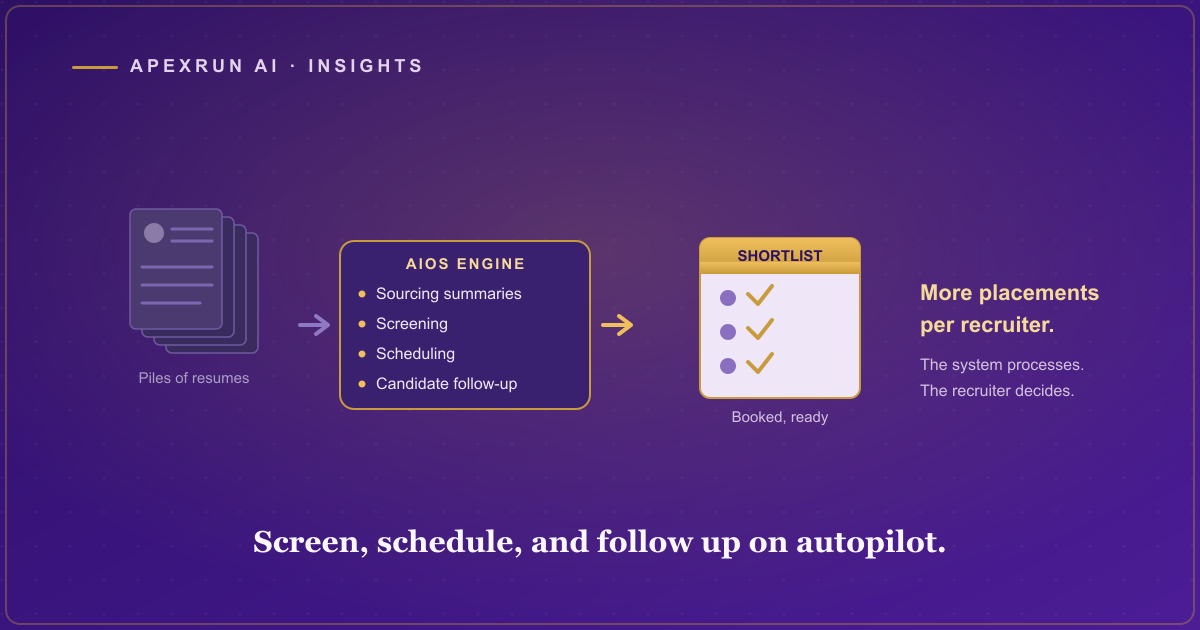
Client intake is where firms lose time and, occasionally, clients. A potential client reaches out, and the response depends on someone being free to capture the details, run the conflicts check inputs, open the matter, and follow up. When the office is busy, intake slips, and a slipped intake is a client who called the next firm on their list.
A system handles the front of this without a person touching it. It captures the inquiry, structures the details into your intake format, gathers what is needed to run your checks, and drafts the follow-up so nothing goes cold. The human decisions, whether to take the matter, the conflicts judgment, the client relationship, remain human. The clerical scaffolding around them stops depending on someone having a free hour.
Research summaries
Legal research is judgment, but a large part of the process is reading volume and reducing it to something usable. That reduction is where a system saves real time. Point it at the documents, the file, the material to be reviewed, and it produces a structured summary: what is in here, what is relevant, what to look at closely. You are not trusting it as the final word, and you should not. You are using it to collapse the first pass of reading so your judgment goes to the parts that need it, not to the parts that are just long.
For a firm, this is the difference between a junior spending a day getting to the starting line and everyone starting the actual analysis in an hour.
Billing prep
The billing narrative is a tax nobody enjoys paying. Reconstructing the day, matching time to matters, writing the descriptions clients will accept. A system that has visibility into the logged work drafts the narrative and assembles the invoice, leaving you to review and approve rather than reconstruct. Time gets captured as it happens instead of guessed at from memory a week later, which tends to mean more of your actual work makes it onto the bill.
The part that decides whether a firm can use this at all
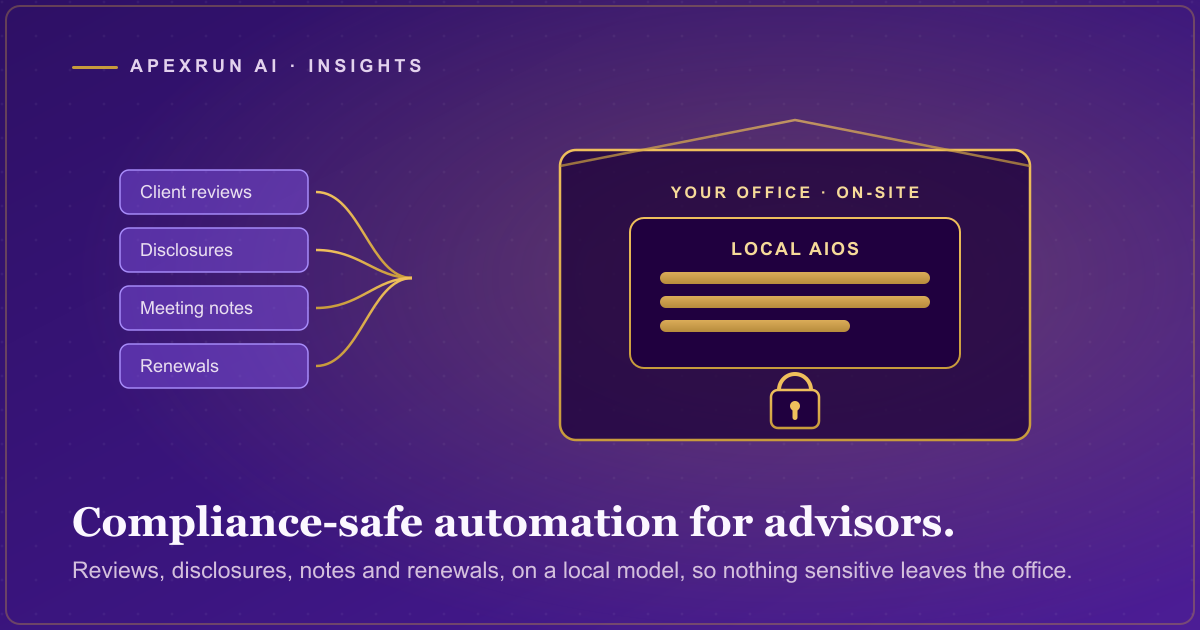
Everything above is attractive. None of it matters if using it means shipping privileged client information off to a cloud service in another country, and for a lot of firms that is a hard stop, correctly. Confidentiality and privilege are not features you trade for convenience.
This is the detail most AI conversations skip, and it is the one that actually determines whether a law firm can adopt any of this. It does not have to run in someone else’s cloud. A capable model can run on a machine inside your own office, so privileged material never leaves the building and never crosses a border into foreign infrastructure. You get the drafting, intake, research, and billing help, and the sensitive information stays where your duty of confidentiality requires it to stay. I made the broader version of this argument in Your Data Should Not Live in a US Data Centre, and for regulated professionals it is the piece worth reading closely, because the efficiency was never the objection. The data custody was.
Why a system beats a pile of legal AI tools
The market is filling up with single-purpose legal AI products: one for drafting, one for research, one for intake. Buy several and you get the trap I keep warning firms about, a drawer of disconnected tools that each solve one task and create coordination work around themselves. The drafting tool does not know what the intake tool captured. The research tool does not feed the billing.
An AI operating system shares one foundation across all of it. The intake it captures becomes the context the drafting uses. The work it sees becomes the billing narrative. That coherence is what turns individual time savings into a firm that runs lighter overall, and it is the reason the operating-system frame beats the point-solution one for professional practices specifically. Our command book for legal practices lays out where firms tend to get the most from this, mapped to how a firm actually operates.
The honest scope: this handles the recurring, high-volume work around your legal judgment, with approval gates wherever a mistake would carry consequence. It does not practise law, and any vendor telling you otherwise is selling you a liability. Used for what it is good at, it gives a firm back the hours currently lost to the work that never should have needed a lawyer.
The fastest way to see where it fits in your firm is the Free CEO Audit. In one hour, direct with the decision-maker, we map where your firm’s time actually goes, identify the drafting, intake, research, and billing work a local system can take off your plate, and hand you a prioritized plan, so you know what to build first before you spend a dollar building it.